
PBY-6A 79 Yankee Lake Superior Squadron
Description:
Base:
Superior Bong Airport, Superior, WI
Website:
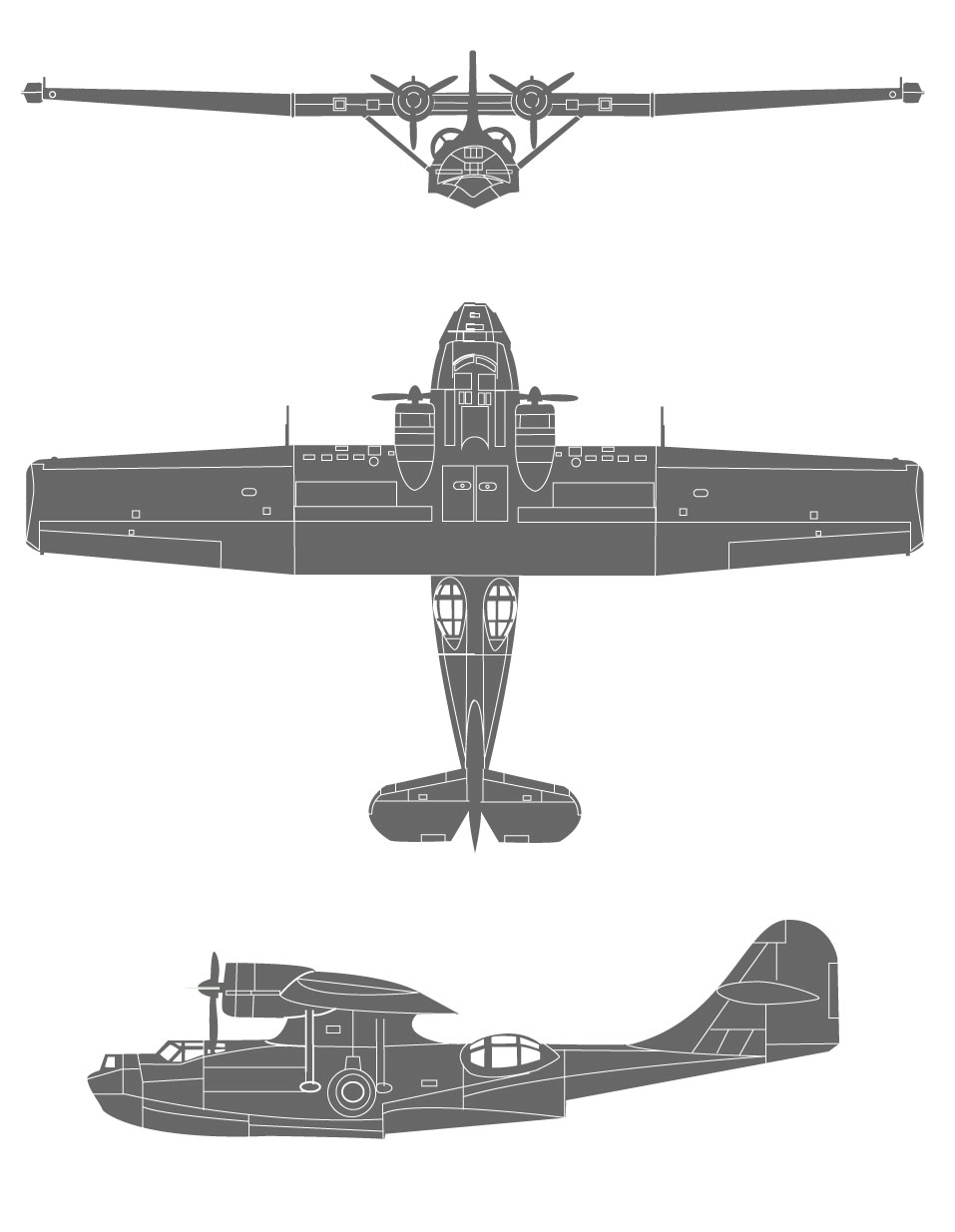
| PBY-6A Specs | |
|---|---|
| Role | Liaison |
| Manufacturer | Consolidated Aircraft |
| Introduced | 1936 |
| Produced | 1936-1945 |
| Length | 63 ft 10 7/16 in |
| Height | 21 ft 1 in |
| Wingspan | 104 ft 0 in |
| Range | 2520 mi |
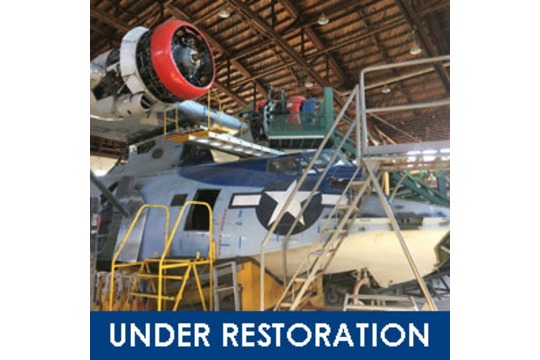
This aircraft represents a unique chapter in the life of the PBY Catalina, combining history from two different airframes into one future flyer. The current project brings together the airworthy wing and engines from Bureau No. 64092 with the restored fuselage of Bureau No. 64097—an ambitious effort to return a Catalina to the skies. Once complete, the aircraft will carry the identity of Bureau No. 64097 and the civil registration N7179Y, continuing the legacy of one of the last Catalinas to serve in U.S. Navy colors.
Bureau No. 64097 is believed to have been among the final PBYs in active U.S. Navy service, retiring in December 1956. Like many surplus military aircraft, it found a second life in civilian hands—transitioning into aerial firefighting as N7082C before heading overseas. Over the following decades, it operated in France, Canada, and even briefly in Norway, adapting to new missions while retaining the rugged qualities that made the Catalina famous. By the 1990s, it had returned to the United States, where it was registered as N7179Y and acquired by the Commemorative Air Force in 1994.
Today, the aircraft is undergoing a complex, dedicated restoration to return it to flying condition. When it flies again, it will be presented in the markings and configuration of June 1942, just prior to the Battle of Midway—a tribute not only to the aircraft itself, but to the crews who flew these long-range patrols at a critical moment in history.
The Consolidated PBY Catalina—known simply as the “Cat”—was among the most versatile and enduring flying boats of World War II. Built by Consolidated Aircraft, the Catalina earned a reputation for reliability, long range, and the ability to operate where few aircraft could. First flown in 1935 as the XP3Y-1, it was quickly adopted by the U.S. Navy as a patrol bomber, meeting a critical need for long-range reconnaissance over vast ocean areas. As the design evolved through multiple variants, including amphibious versions with retractable landing gear, the Catalina became a familiar sight across the world’s oceans.
Though never fast, the Catalina didn’t need to be. Its strength was endurance—capable of staying aloft for hours, searching the empty seas for enemy ships, submarines, or survivors. That capability made it indispensable for roles ranging from anti-submarine warfare to maritime patrol and logistics. It also became one of the war’s most effective search-and-rescue aircraft, credited with saving thousands of lives. Crews often joked that “everything that flew attacked the Catalina,” but its rugged construction and steady handling gave it a fighting chance even when outmatched.
Catalinas served in every theater of the war and with Allied forces around the globe, including the United States, Britain, and the Soviet Union. They played a key role in locating the Japanese fleet before the Battle of Midway and carried out daring night torpedo attacks in the Pacific. From the Atlantic convoy routes to the islands of the South Pacific, the PBY proved it could do almost anything asked of it. Long after the war, many continued to fly in roles such as firefighting and rescue—an enduring legacy for one of aviation’s most capable flying boats.