C-47 "That's All, Brother" Central Texas Wing
Description:
Base:
San Marcos, TX
Website:
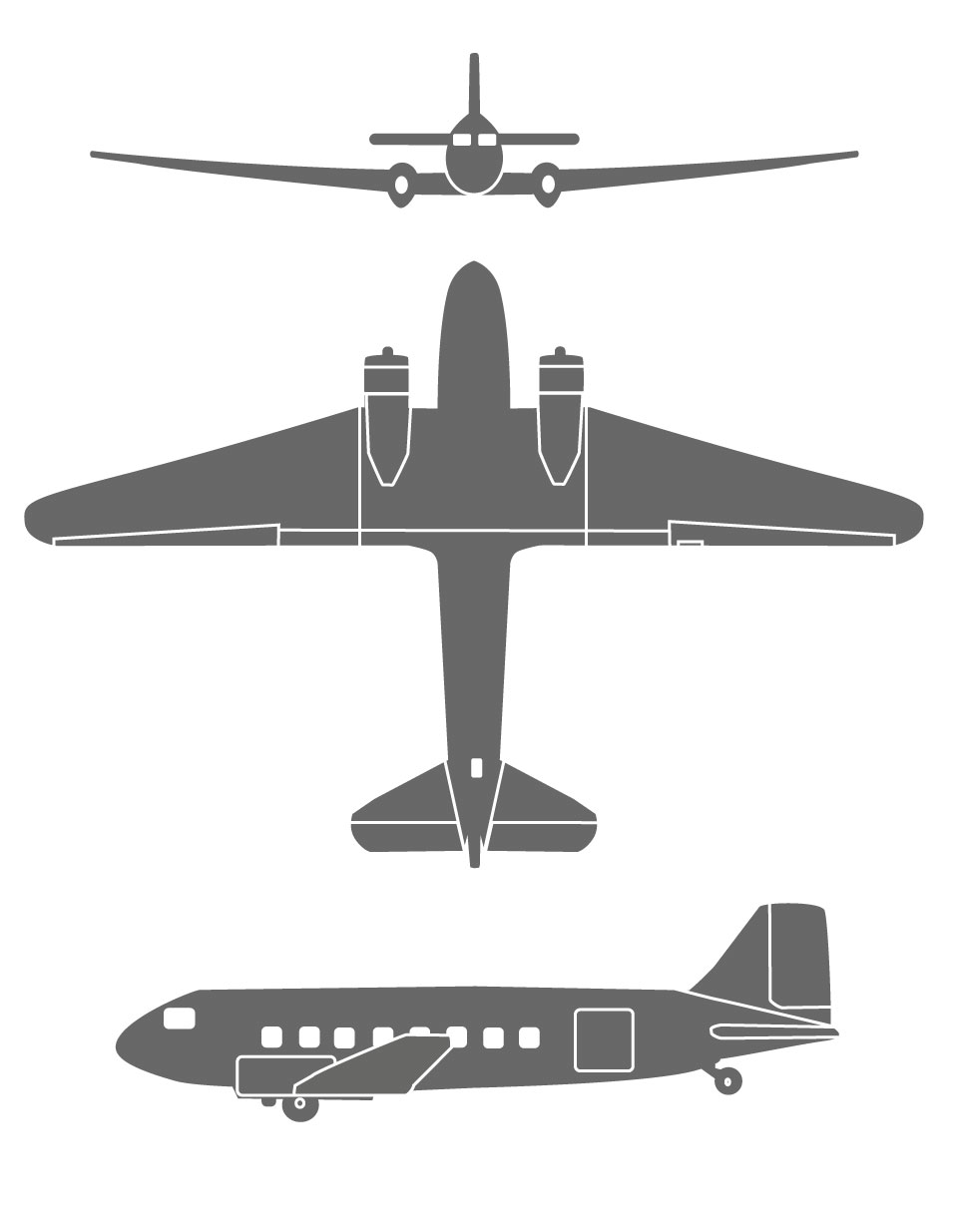
| C-47 Specs | |
|---|---|
| Role | Transport |
| Manufacturer | Douglas |
| Power | 2 x Pratt & Whitney R-1830-92 radial |
| Length | 63 ft 9 in |
| Height | 16 ft 11 in |
| Wingspan | 95 ft 6 in |
| Range | 1,600 mi |
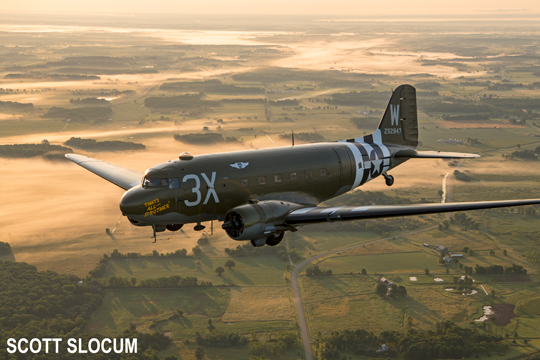
On June 6, 1944, That’s All, Brother led the main airborne invasion of Normandy. Piloted by Lt. Col John Donalson, the plane led over 800 C-47s that dropped over 13,000 paratroopers into a battle that changed the course of mankind.
After serving on D-Day, and in Operations Dragoon, Market Garden, Repulse, and Varsity, the airplane returned to the United States and was sold to the civilian market in 1945. During the course of many owners over the next several decades, the historical significance of the airplane was lost, and it was eventually sold to be scrapped. Fortunately, two Air Force Reserve historians discovered that this historic airplane was lying in a boneyard in Wisconsin. The Commemorative Air Force was able to acquire the airplane, and through a large group of donors and volunteers, restore the airplane to flying status.
“That’s All, Brother” has been restored to its 1944 condition, including its D-Day paint scheme along with a thorough historic interior restoration. The CAF maintains airplanes to be artifacts of living history, and you can experience the airplane firsthand by touring and even going for a flight.
The Douglas C-47 Skytrain began as the military adaptation of the revolutionary DC-3 airliner and became one of World War II's most versatile aircraft. Built for the U.S. Army Air Forces, the C-47 carried troops and cargo, evacuated wounded personnel, towed gliders, and dropped paratroopers in operations around the world. The U.S. Navy and Marine Corps operated their own versions, designated R4D, for transport, supply, and personnel missions across vast wartime distances.
After World War II, the aircraft remained in military service for decades. In 1962, the Navy redesignated R4Ds as C-47s under the standardized U.S. military designation system. During the Vietnam War, the venerable transport assumed a new role. Modified with side-firing miniguns, the AC-47 gunship—nicknamed “Spooky”—provided sustained fire support to troops and defended bases and villages at night.
Few aircraft adapted so successfully to so many missions across so many decades.